Backwater Valve Maintenance in Ottawa: Homeowner Guide
A practical Ottawa homeowner guide to safe backwater valve checks, the City’s maintenance advice, warning signs and knowing when to leave the work to a qualified plumber.
General homeowner information only. A qualified plumbing professional must assess the home, and City requirements and decisions govern.
City references on this page last reviewed . This is a City-source review date, not the article’s publication or full editorial update date. Verify current requirements directly with Ottawa.
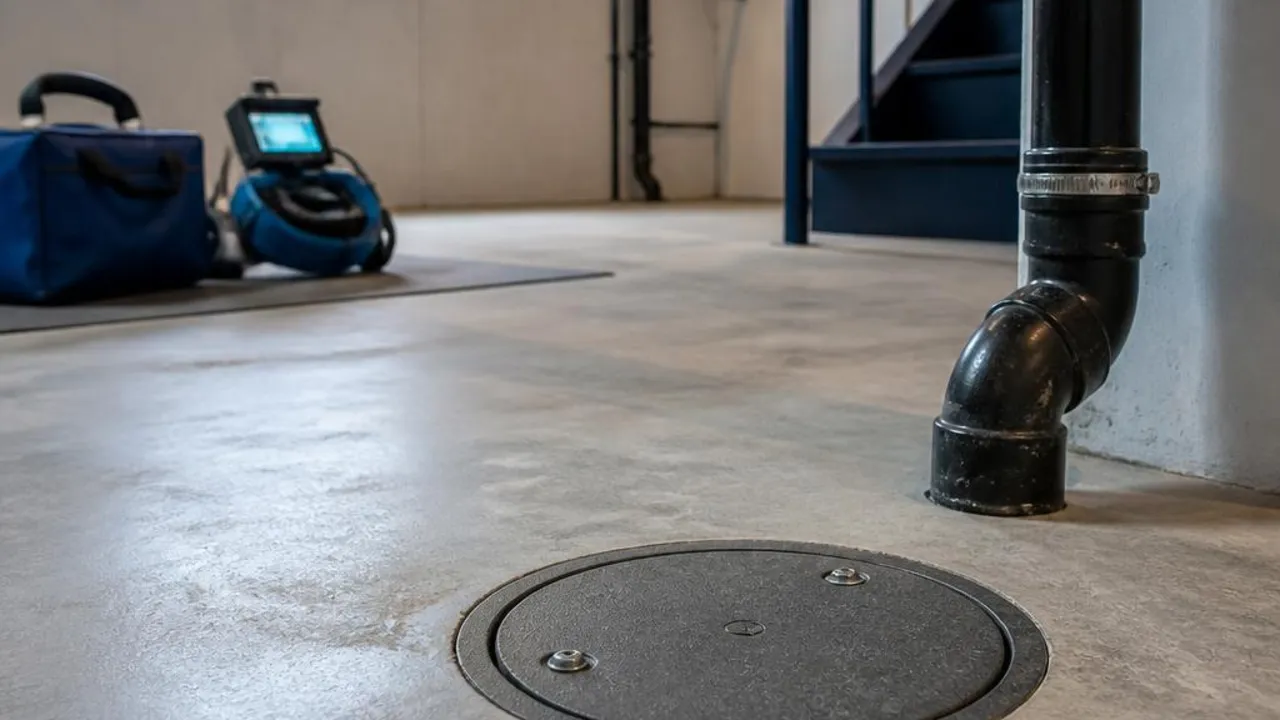
AI-generated illustration, not a specific Ottawa installation. Valve type, access and pipe layout vary by property.
Backwater valve maintenance in Ottawa starts with keeping the access point reachable and following the instructions for the installed device. The City advises periodic maintenance or a check before forecast heavy rain; it does not set one universal homeowner interval. Do not open or dismantle an unfamiliar valve—ask a qualified plumber if it looks damaged, obstructed or uncertain.
01
What backwater valve maintenance covers
A backwater valve is installed on a particular sanitary or storm sewer connection. Its gate is normally open for drainage in the intended direction and may close when sewer flow reverses. Maintenance is about keeping the approved device in the condition and accessible state described by its manufacturer—not changing the plumbing design or trying to improve the system with a generic online procedure.
The City of Ottawa says the property owner is responsible for maintaining protective plumbing according to the manufacturer’s directions. It recommends checking periodically or before forecast heavy rainfall that the device is free of debris, functioning properly, and that cleanout caps and access covers are firmly secured. The City also notes that older homes, especially those with cast-iron piping, may need additional attention because rust can form around the hinge and interfere with closure. Read the City’s protective plumbing FAQ and basement-flooding prevention guidance.
Those instructions do not mean every homeowner should lift a cover or touch an internal gate. A secured access cover may protect a plumbing opening, and the valve may contain wastewater. If you do not know the installed model or cannot identify a safe external check, stop at observation and arrange qualified help. The main benefit of a homeowner checklist is knowing what to notice and when to hand off the work.
Start with visible conditions from a safe position. Do not remove a secured cover, reach into a pipe, or work around standing water or sewage. If a valve is in a floor box, a crawlspace, a utility room or outside below grade, access may involve hazards or require tools and locating work. A generic diagram is not permission to open an unfamiliar assembly.
Keep the area accessible. Do not cover the access point with storage, built-ins or a permanent finish. If it is outdoors, do not dig to locate it based only on an online picture.
Notice the condition of the cover. From the outside, look for obvious movement, damage or a missing cap. If anything is loose or broken, avoid opening it and get advice.
Pay attention to an alarm. An alarm can indicate that the valve is engaged and limiting flow. Treat it as a reason to stop normal plumbing use and follow the installed device’s instructions.
Record what you observe. Note the date, weather, alarm activity and any backup symptoms. A short note can help a plumber understand whether a problem is recurring.
Ottawa’s guidance also says the valve should be free of debris and functioning properly, but it does not turn that statement into a safe DIY cleaning method for every product. Internal debris, a stuck flap or rust at a hinge should be assessed using the manufacturer’s procedure and suitable professional judgment.
HOMEOWNER QUICK REFERENCE
Four safe checks. No valve disassembly.
A visual reminder, not a substitute for the installed device’s instructions.
01
Keep access clear
Leave the cover reachable; do not dig or move heavy items to expose a buried valve.
02
Look for visible issues
Notice loose covers, damage, alarm activity or obvious obstruction without opening the device.
03
Follow the model guide
Use the manufacturer’s instructions and Ottawa’s periodic / before-heavy-rain guidance.
04
Stop when unsure
Do not reach inside, force a flap or handle wastewater; ask a qualified plumber.
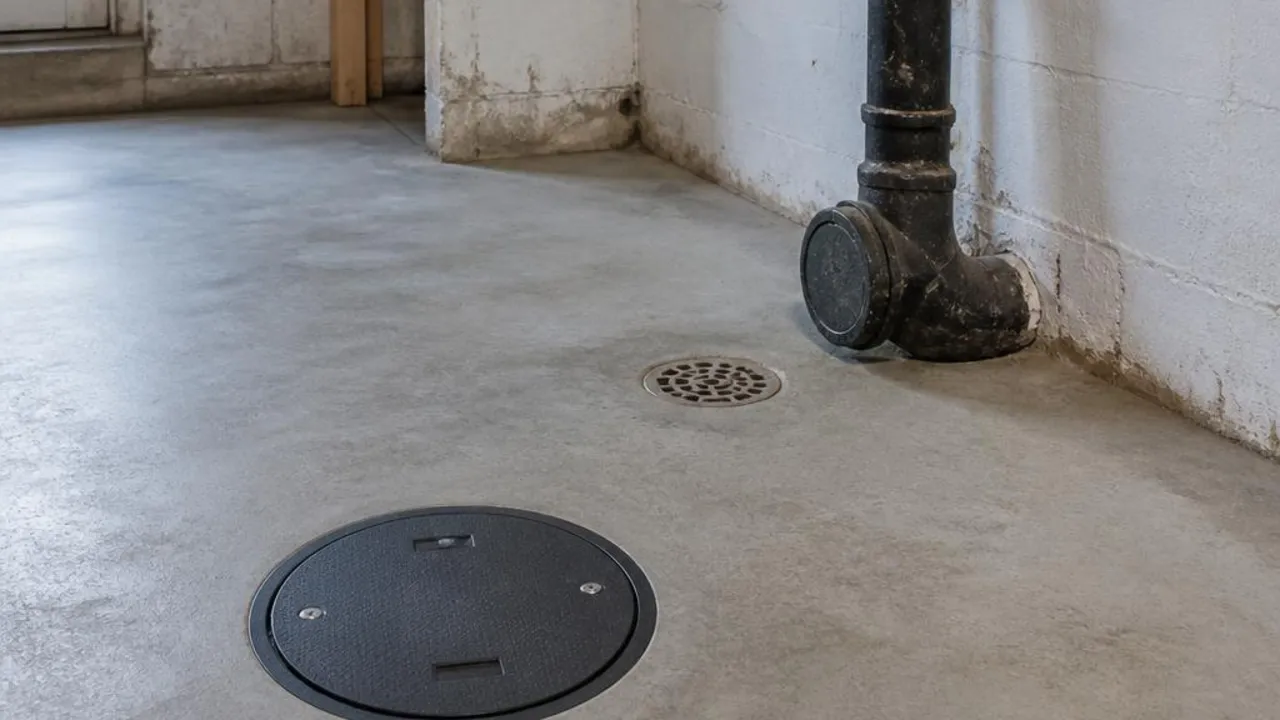
Based on City of Ottawa protective-plumbing guidance. Manufacturer instructions and the valve’s actual condition govern.Keep access visible and reachable. AI-generated illustration; it does not show a specific home or valve model.
03
When should you check a backwater valve?
Use the manufacturer’s maintenance schedule first. Ottawa’s homeowner guidance says to maintain protective plumbing periodically or before forecast heavy rainfall; it does not establish a single yearly interval that applies to every valve, material, installation and property. Avoid adopting a fixed schedule from an unrelated product or contractor’s checklist without confirming that it matches your device.
A practical routine is to learn where the valve is, save its instructions and permit or installation records, and make a visual check when the City’s guidance or the product manual calls for one. A forecast storm is a useful reminder to make sure the area is reachable and that you know what to do if an alarm sounds. It is not a reason to open an unfamiliar valve at the last minute.
Consider arranging a professional review if the valve has not been inspected since installation, its manufacturer or model is unknown, the home has older cast-iron piping, or there has been a recent sewer backup. These are reasons to ask questions, not proof that the valve has failed. A site visit is needed to assess the actual connection and device.
Seasonal landscaping, storage changes or basement renovation can also hide an access point. Before finishing a wall or floor, confirm that the valve remains accessible as required for the installation and local approval. Ottawa’s permit page specifies access for inspection and maintenance for the normally open sanitary valve it describes; do not extend that one condition into a design rule for every existing setup.
04
Warning signs that deserve professional attention
Some visible or audible changes are useful to report, but they do not diagnose the cause on their own. A slow drain can have several explanations. An alarm may indicate a closure, while a wet floor could come from a sewer backup, foundation water, a plumbing leak or another source. Describe what happened and where rather than assuming the valve is responsible.
The valve alarm sounds or its indicator changes. Treat an engaged device as a possible restriction on connected drainage. Stop routine water use until the system is safe and you have clear instructions.
The access cover is damaged or cannot be secured. Keep people away from the opening and arrange a professional assessment instead of improvising a replacement cover.
You see corrosion, debris or a stuck component. Do not try to scrape, lubricate or force the gate unless the manufacturer explicitly authorizes that task for a homeowner.
Backups or unusual drainage recur. A professional may need to trace the affected connection and consider other water paths, not just clean the valve.
Keep children and pets away from exposed wastewater or an unsafe opening. If a basement contains contaminated water, avoid contact and seek qualified cleanup or municipal health guidance as appropriate. A backwater valve is one protective device; Ottawa’s broader advice also discusses foundation drains, sump pumps, lot drainage, downspouts, window wells and cracks.
05
What to do if the valve closes during a backup
When a backwater valve is engaged, wastewater from connected fixtures may not be able to leave the home. The City’s FAQ specifically says not to shower, flush toilets or wash clothing while the valve is engaged. In practice, pause water use from connected sinks, showers, toilets, laundry, dishwashers and other fixtures until the alarm and valve return to normal and the situation has been checked.
Do not force the flap open, remove a cover or run water to test whether the valve has reopened. Follow the manufacturer’s instructions and contact a qualified plumbing professional if the alarm continues, the gate appears stuck, or you cannot tell whether it is safe to resume use. If there is active sewage in the basement, keep away from it and get appropriate help.
When the event is over, record when the alarm started and stopped, what water was used just before it, where any backup appeared and what the valve indicator showed. This information can help distinguish a closed valve from a separate plumbing or groundwater issue. It can also help a professional explain what the device protects and what it does not.
Do not use the plumbing as a test.
When a valve may be closed, additional wastewater can have nowhere to go. Wait for safe conditions and qualified direction rather than flushing or running water to check.
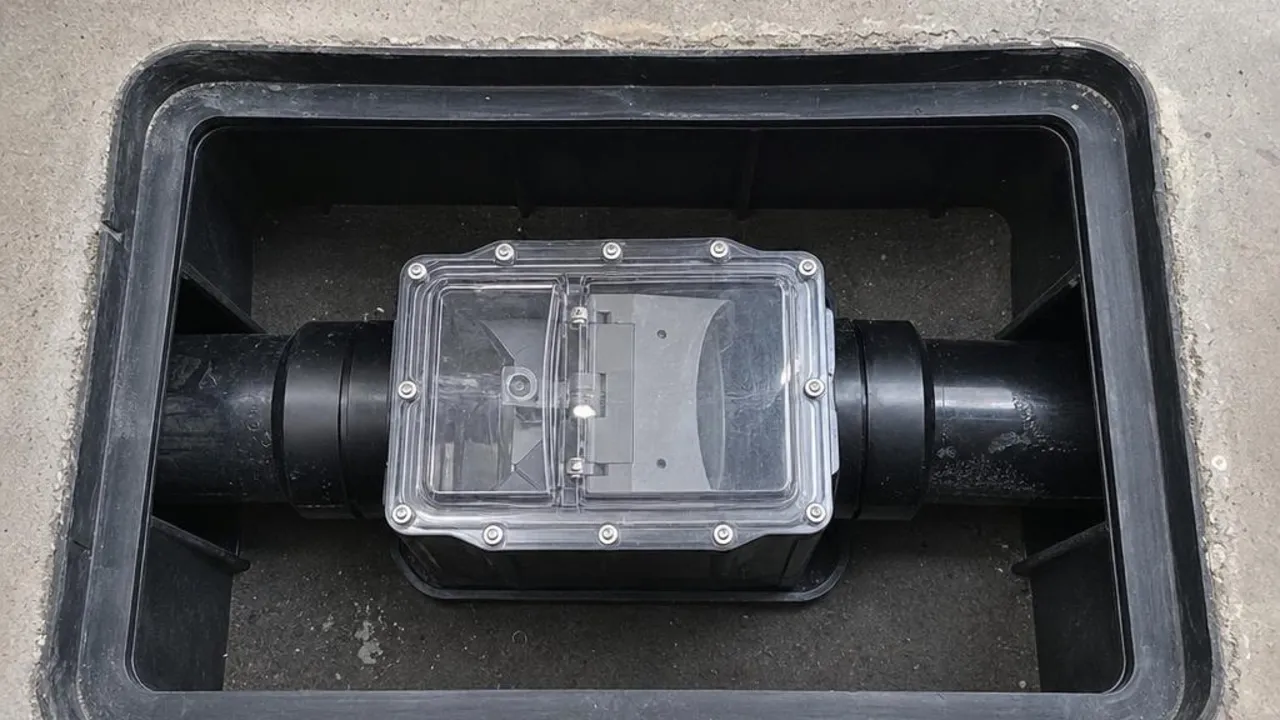
Illustrative in-line backwater valve with a transparent lid. AI-generated image, not an installation specification or a Lister Plumbing customer project.
06
When to call a qualified plumber
Ask a qualified plumbing professional to inspect the device when you cannot confirm its type, the access is buried or blocked, the cover is damaged, the valve alarm is unexplained, the gate appears stuck, or a backup has occurred. A professional can review the accessible connection, identify the product where possible, and explain which maintenance steps match the installed model.
Before a visit, gather the address area, any installation or permit documents, a photo of the closed access cover if it is safe to take one, and a short account of the symptoms. Do not send someone into a confined space, remove a cover or handle sewage to produce a better photo. Ask what inspection includes, whether cleaning or repair is a separate scope, and whether the work will change any plumbing or require a permit.
For a new system or a larger alteration, the City’s July 2026 protective-plumbing advisory says a building permit is required for installation of protective plumbing devices and lists plans and device information to submit. The permit scope is separate from routine observation. A plumber should explain how the proposed work connects to the City’s current permit process.
The City’s Residential Protective Plumbing Program lists rebates for eligible protective plumbing work, but it excludes maintenance, repair and replacement of existing devices. That means a routine service visit or fixing an existing valve should not be budgeted as though it qualifies for an installation rebate. The City decides eligibility and the program details can change.
If an assessment leads to a new protective-plumbing installation, check the current City permit and rebate requirements before work starts. The City says a building permit is required for installation of protective plumbing devices. Its program also has property criteria, supporting documents, inspection steps and an application deadline. Read the Ottawa rebate guide and verify the live Residential Protective Plumbing Program page.
Do not assume an existing valve qualifies because it was installed years ago, or that a permit automatically means a rebate is approved. If the project combines new installation with repairs to existing devices, ask the City how it treats each part before authorizing work.
Official City referenceProtective plumbing: permits and program
Confirm current requirements, application documents and exclusions with Ottawa.
Keep simple records and choose the right next read
A short maintenance record does not need to become a technical log. Save the manufacturer’s instructions, valve model if known, access location, permit and inspection information, and the dates you noticed an alarm or requested service. After a professional visit, ask for a written note describing what was checked, what was found and whether follow-up is recommended.
For a different water concern, a sump pump may be relevant to groundwater reaching a pit, while a backwater valve concerns reverse flow through a sewer connection. Ottawa’s sump pump guide explains that distinction, local discharge advice and the current rebate line items. For general device behavior, see how a backwater valve works.
If you are considering new work, Lister Plumbing’s page on backwater valve installation in Ottawa describes its installation service. Contact the company directly to confirm whether it offers the specific inspection or maintenance scope you need; this information site does not verify appointments or service availability.
09
Backwater valve maintenance FAQs
How often should I check a backwater valve in Ottawa?
Ottawa advises maintaining protective plumbing according to the manufacturer, and checking periodically or before forecast heavy rainfall. The City does not prescribe one universal annual interval for every valve. Use the instructions for your installed model and ask a qualified plumber if the device or its condition is unknown.
What can a homeowner safely check?
Keep the access area reachable and look for obvious damage, a missing or loose cover, or a visible alarm. Do not remove a secured cover, reach into a valve, or try to clear internal debris unless the manufacturer specifically describes a safe homeowner task and you can do it safely. When in doubt, stop and call a plumber.
What should I do if the valve closes?
Stop using toilets, sinks, showers, laundry equipment and other plumbing connected to the closed valve. The City says wastewater may not be able to drain while the device is engaged. Do not force or dismantle the valve; follow its alarm instructions and get qualified guidance before returning to normal use.
Does Ottawa rebate backwater valve maintenance?
The City’s Residential Protective Plumbing Program excludes maintenance, repair and replacement of existing protective plumbing devices. Its listed rebates relate to eligible work and requirements, not routine servicing. Check the current City program page before planning any work or relying on a rebate.
When should I ask a plumber to inspect the valve?
Ask for professional help if the valve is damaged, stuck, obstructed, inaccessible, repeatedly alarming, or if you cannot identify its type or safe maintenance steps. A plumber can assess the installed device and its connection; a general website checklist cannot establish the condition of a specific home.
Can I clean the backwater valve myself?
Do not assume that a valve can be safely opened or cleaned by a homeowner. Follow the exact manufacturer instructions for your model. If cleaning requires opening the access cover, handling wastewater, freeing a flap or reaching into a pipe, leave the task to a qualified plumbing professional.
Keep your bearings
One plumbing question often leads to another.
Continue with a related guide, or return to the overview to compare the planning tools.