Skip to content
Home/Sump pump guide

Homeowner guide · Groundwater & drainage

Sump Pump Ottawa: Maintenance, Backup & Rebate Guide

Understand what a sump pump can manage, which checks are safe, how discharge and backup fit into the plan, and what Ottawa currently says about permits and rebates.

General homeowner information only. A qualified plumbing professional must assess the home, and City requirements and decisions govern.

City references on this page last reviewed . This is a City-source review date, not the article’s publication or full editorial update date. Verify current requirements directly with Ottawa.
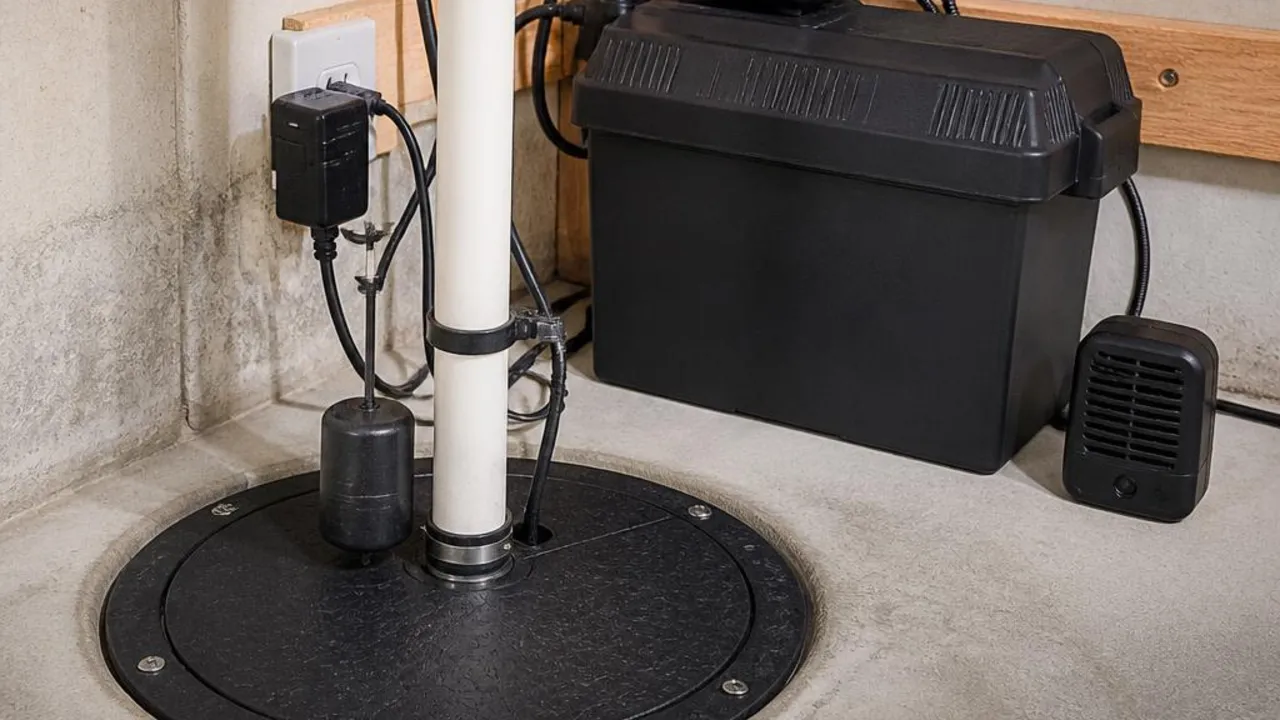
Illustrative sump pump basin and discharge piping with a battery backup unit in a basement utility area
AI-generated illustration, not a specific Ottawa installation. Pump type, basin, backup and discharge vary by property.

A sump pump in Ottawa moves water collected in a sump pit to a suitable discharge; it manages groundwater reaching that pit, not sewage reversing through a sanitary drain. Ottawa says the outlet should connect to the storm sewer or discharge to ground at least 1.2 metres from the foundation. Confirm the route, permit and current rebate details for your property.

01

What a sump pump does—and what it cannot do

A sump pit collects water, commonly from foundation drains or weeping tile. When water in the basin rises, a pump sends it through a discharge pipe to the storm sewer or a suitable outlet away from the home. Ottawa’s protective-plumbing FAQ describes this groundwater path and notes that a secondary pump can support the primary pump if it fails or is overwhelmed, when the system is appropriately designed.

A sump pump does not stop a sanitary sewer from surcharging. It also cannot fix every source of basement water, such as a plumbing leak, poor surface drainage, blocked downspout, foundation opening or a failed foundation drain. The first question is therefore not simply “Do I need a bigger pump?” but “Where is the water coming from, and what route is bringing it inside?”

Ottawa’s guidance treats protective plumbing as a set of devices and drainage measures, not a single product that guarantees a dry basement. A sump pump and backwater valve can both be relevant to one home while solving different problems. Before choosing equipment, ask a qualified professional to identify the water path and the existing drainage arrangement.

02

Match the equipment to the water path

Use this comparison as a conversation starter, not as a diagnosis. The same symptom—water on a basement floor—can have more than one cause. A pump in a pit cannot redirect water entering somewhere else, and a sewer valve cannot pump groundwater away.

BASEMENT WATER PATHS

Choose protection for the water source.

These systems address different routes and are not interchangeable.

SEWER SURCHARGEBackwater valve

Can help limit reverse flow through the protected sewer connection.

GROUNDWATER AT A PITSump pump

Moves water collected in a sump basin toward a suitable discharge.

SURFACE / FOUNDATION ENTRYDrainage assessment

Grading, downspouts, openings and foundation drainage may need attention.

Conceptual guide only. Ottawa’s flooding guidance identifies multiple entry routes; a qualified professional should assess the property.

Ottawa’s flood-prevention guidance recommends that foundation drains be directed to a storm sewer or sump pump, not a sanitary sewer. It also discusses grading, downspouts, sealing and other entry routes. A qualified professional can inspect the drainage layout and explain whether the concern belongs to the sump system, the sewer connection, exterior drainage or more than one area.

When asking for an assessment, describe where and when water appears, whether a pump starts or an alarm sounds, and whether water returns after pumping. Avoid guessing that a valve or pump has failed just because it is nearby. Keep the distinction clear when comparing estimates, and ask each provider to state which water path their proposed scope addresses.

03

Safe sump pump checks for homeowners

Follow the pump and backup manufacturer’s instructions. Ottawa says protective plumbing should be maintained periodically or before forecast heavy rainfall, and Hydro Ottawa notes that a sump-pump cover and alarm can help keep debris out and alert a homeowner to a problem. A visual check can help you notice a change; it does not confirm the pump’s capacity or condition.

  • Keep the area accessible. Make sure the pit cover and surrounding work area are not blocked by stored items. Do not lift a heavy or secured lid if you are unsure how it is installed.
  • Look for an alarm or visible change. Notice a warning light, alarm, water on the floor, damaged piping or a cover that has moved. Do not reach into the pit.
  • Observe the discharge outlet safely. If it is visible from ground level, note whether it appears blocked, disconnected or directed toward the foundation. Do not climb, dig or redirect it during a storm.
  • Check backup status by its manual. Follow the manufacturer’s procedure for indicator lights, charging status or an allowed test. Do not improvise an electrical or water test.

Do not handle a pump, outlet, plug or backup equipment while standing in water. If the pump is silent when water is visibly rising, runs continuously, cycles repeatedly, trips an alarm or makes a new grinding sound, keep clear and call a qualified professional. These symptoms can have multiple causes; they do not prove that the pump alone is the problem.

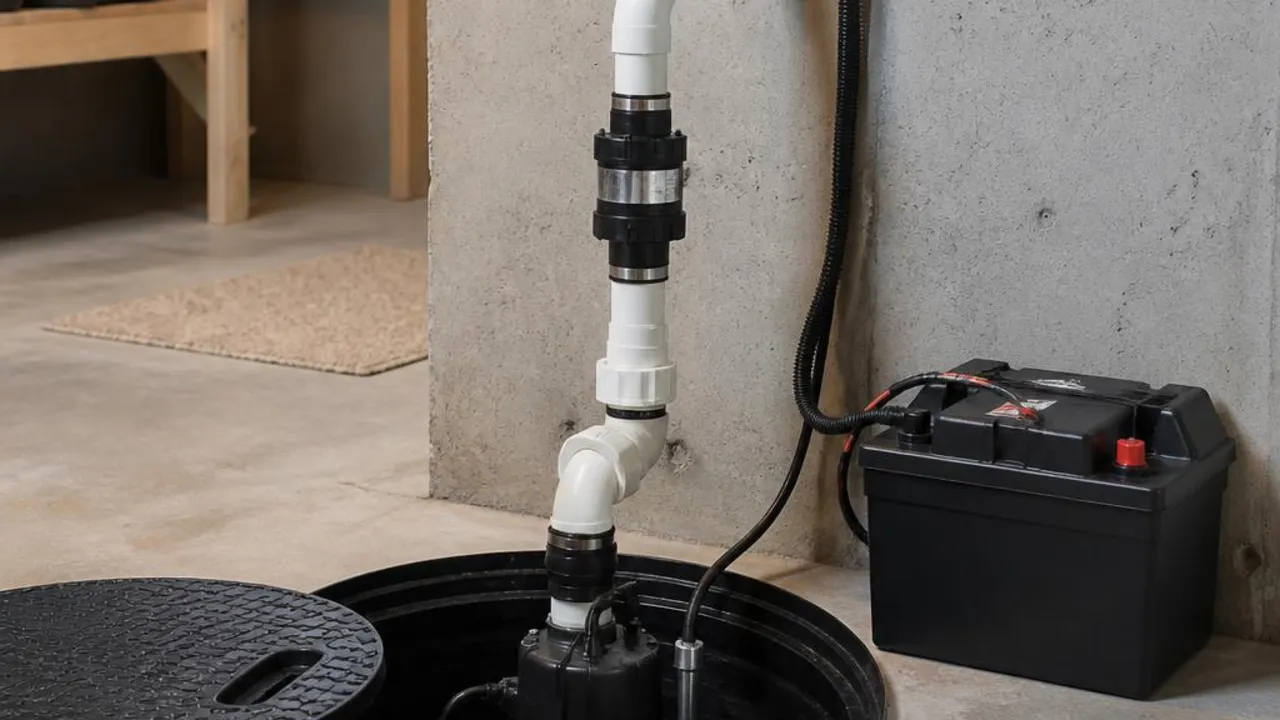
Illustrative sump basin, pump and separate battery backup equipment in a tidy basement utility area
Check indicator lights and backup equipment only as the manufacturer directs. AI-generated illustration, not a specific product or installation.
04

Primary pumps, secondary pumps and backup power

A primary pump moves water during ordinary operation. A secondary pump can provide another pumping path when the primary pump fails or cannot keep up, if the pit and equipment are suitable. Battery backup power can help a compatible pump continue during a power interruption while the battery is charged and the components are working. A whole-home generator is another possible power arrangement, but it has its own equipment and safety considerations.

Hydro Ottawa’s sump-pump overview describes submersible and pedestal pumps as common options, with different trade-offs for noise, service access and installation. It also discusses battery, water-powered and generator backup approaches. The right choice depends on the pit, water inflow, discharge route, available power and the way equipment can be maintained. Do not select a pump by a generic online capacity recommendation.

Backup equipment is not a promise of unlimited runtime or a dry basement. Batteries need to be compatible, charged and maintained; a pump, float switch, discharge pipe or backup can still have a problem. Ask the installer to show what the alarm means, how the backup is checked under the manufacturer’s procedure, what parts need service and what limitations apply during a long outage.

Keep power and water safety central. Do not touch electrical equipment from a wet area or try to repair wiring yourself. Ask a qualified plumber or electrician which parts of the system they are responsible for, especially if the proposal includes a generator, a new circuit or electrical changes.

Compare options with a professionalHydro Ottawa’s sump pump overview explains common pump and backup types.
05

Plan the discharge route as carefully as the pump

A pump can only move water to its outlet; the discharge route determines where that water goes next. Ottawa’s homeowner flood-prevention page says a sump pump should connect to the storm sewer or discharge to ground at least 1.2 metres from the foundation. The City also says foundation drains should not be connected to the sanitary sewer. Check the live guidance and the approved plan for your property before changing a route.

Do not judge a discharge solely by where the pipe leaves the wall. Ask where the line terminates, whether the outlet can be observed and maintained, and whether water could return toward the foundation. If the route is buried or hidden, do not excavate or reroute it based on a drawing from another property. Existing grades, sidewalks, neighbouring lots and approved connections can affect what is suitable.

Ottawa’s 1.2-metre distance is specific guidance, not a universal design for every site condition. A professional should confirm the proposed path, outlet and permit scope. If water repeatedly collects near the foundation, consider whether grading, downspouts or other drainage measures also need review; adding a pump does not automatically correct those conditions.

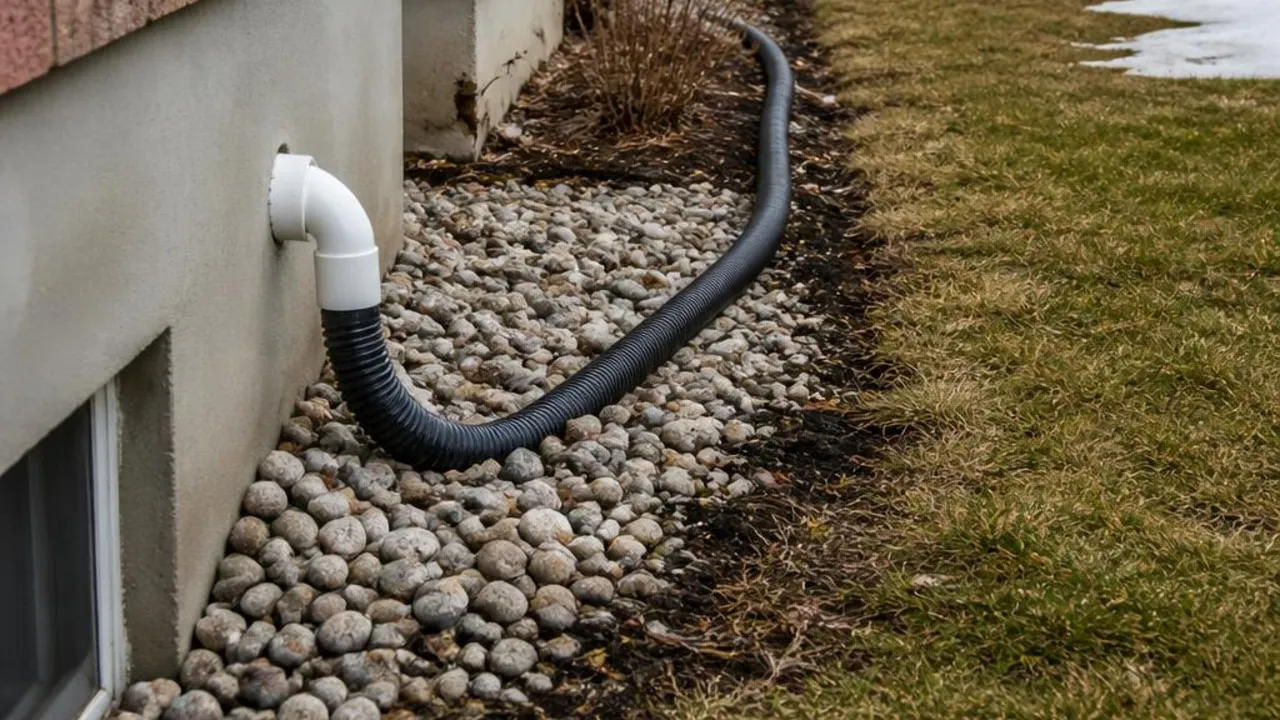
Illustrative sump pump discharge pipe routed from a home foundation across a clear landscaped strip
Ottawa’s guidance addresses the outlet route; the suitable discharge plan depends on the property. AI-generated illustration, not an approved site plan.
06

Ottawa sump pump permits and rebates

The City’s July 2026 protective-plumbing advisory says a building permit is required to install protective plumbing devices, including a sump pump or approved backwater valve. It asks for detailed plans and device information; the advisory lists floor plans for the storeys in scope, dimensions, device location and type, make and model, designer information, and rebate documents if applicable. Read the City’s protective-plumbing permit advisory before arranging work, then confirm the application requirements for your project.

Ottawa’s Residential Protective Plumbing Program lists maximums for qualifying sump-pump work that depends on the pit and backup arrangement. The page lists up to $1,500 for qualifying primary or secondary pump work with battery backup or a whole-home generator in an existing pit, and up to $3,000 when a new pit is constructed. The program also lists 100% of the current building-permit fee for plumbing work only. These are maximums, not promised payments; the City pays no more than eligible costs and determines each application.

The program’s page states that completed work and the application must be received within 18 months of permit issue; the 18-month period took effect July 1, 2026. It also requires permit and inspection documentation and a paid itemized invoice. The listed construction-date criteria on that page refer to storm and sanitary backwater valve categories; do not automatically apply those valve cutoffs to the separately listed sump-pump items. Confirm the rules for your address and proposed work with the City.

Ottawa excludes maintenance, repair and replacement of existing protective plumbing devices from the rebate. A pump tune-up or replacing an existing pump should not be assumed eligible. If a project combines new equipment with work on an existing pit, ask the City how it treats the items before relying on reimbursement.

City-listed sump-pump categoryMaximum
Qualifying pump / backup work in an existing pit$1,500
Qualifying pump / backup work with a new pit$3,000
Building permit fee for plumbing work only100% of current fee

The City’s current program page controls eligibility, documents and payment. Maintenance, repair and replacement are excluded; the applicable amount cannot exceed eligible work cost.

Verify before work beginsResidential Protective Plumbing Program

Current eligibility, sump-pump maximums, permit records and application timing.

Open City program
07

Questions to ask before choosing a sump pump

A useful assessment connects the water source to the proposed equipment and discharge path. Ask the professional to describe what was observed, what remains unknown, whether the existing pit is suitable and how pump selection relates to the water entering it. A quote should distinguish a replacement in an existing basin from a new pit, drainage changes, backup equipment, discharge work and restoration.

  • Which water path is this project meant to manage, and what evidence supports that conclusion?
  • What pump, float, alarm and backup components are proposed, and how will their limits be explained?
  • Where will the water discharge, and how does the route meet current City guidance for this property?
  • Who will prepare the plans, obtain the permit, arrange inspection and provide the documents needed for a City application?
  • What is included in the written quote, what is excluded, and which conditions could change the scope?

There is no verified universal sump-pump price to publish for Ottawa. The scope can change with the existing basin, foundation drainage, water inflow, discharge route, backup, permit and restoration. Do not treat a City rebate maximum as a price estimate or guaranteed discount.

For a project-specific installation discussion, Lister Plumbing’s page on sump pump installation in Ottawa describes its service. Confirm current availability, project fit and the work included directly with the company. For a different water path, review the backwater valve maintenance guide and the broader Ottawa homeowner guide hub.

08

Sump pump Ottawa FAQs

What does a sump pump do in an Ottawa home?

A sump pump moves water that has collected in a sump pit, often from foundation drains, through a discharge pipe to the storm sewer or a suitable surface outlet. It manages water reaching that pit; it does not stop wastewater from reversing through a sanitary sewer connection.

Should an Ottawa sump pump have battery backup?

A battery backup may help keep a compatible pump operating during a power interruption while the battery and equipment are working. The right backup depends on the home, drainage, pump and power setup. It is not a guarantee of unlimited runtime or a dry basement; ask a qualified professional about suitable options.

What sump pump rebate does Ottawa offer?

The City currently lists a maximum of $1,500 for qualifying backup-equipped pump work in an existing pit and $3,000 when a new pit is constructed. These are ceilings, not guaranteed payments; eligible work cost, property criteria, permit, inspection and application documents affect the result. Confirm current rules with Ottawa.

How far should a sump pump discharge be from the foundation?

Ottawa’s basement-flooding guidance says a sump pump should connect to the storm sewer or discharge to the ground at least 1.2 metres from the foundation. The suitable route depends on the property and current requirements. Have the outlet and drainage path checked rather than redirecting a pipe based on a generic diagram.

Does a sump pump prevent a sewer backup?

No. A sump pump moves water collected in its pit, while an approved backwater valve can help limit reverse flow through a protected sewer connection. They address different water paths. Neither device prevents every cause of basement flooding, so identify the source before choosing work.

Does Ottawa require a permit for sump pump installation?

The City’s July 2026 protective-plumbing advisory says a building permit is required to install protective plumbing devices, including sump pumps and backwater valves. It lists plan and device details to submit. Confirm the current application and scope with the City before work starts.

How much does a sump pump cost in Ottawa?

There is no single verified price for every Ottawa home. A pump replacement, a new sump pit, backup equipment, discharge routing and related drainage work are different scopes. Ask for a written, site-specific quote that separates equipment, plumbing, permit, electrical and restoration items where they apply.

Keep your bearings

One plumbing question often leads to another.

Continue with a related guide, or return to the overview to compare the planning tools.